Music
“I would teach children music, physics, and philosophy; but most importantly music, for the patterns in music and all the arts are the keys to learning” – Plato
Overview
Music is a universal language that embodies creativity, expression, and cultural understanding. At Katherine Warington School, our Music curriculum aims to nurture students’ passion for performing, composing, and listening to music while developing transferable skills of creativity, discipline, collaboration, and confidence.
Through practical performance, composition, and listening and appraising, students become curious, independent musicians who are able to analyse, create, and evaluate music across a diverse range of genres, traditions, and contexts. Music develops resilience, empathy, and critical thinking, while fostering teamwork and communication.
Our intent is to ensure all students, regardless of prior experience, develop the musical knowledge, practical skills, and cultural awareness to engage with music both academically and recreationally, now and in the future.
Curriculum Implementation
Analyse & Explore
Students explore music through active listening, appraising, and contextual study. From Year 7 onwards, they analyse repertoire using IRDM (Instrumentation, Rhythm, Dynamics, Melody) and gradually build their ability to recognise form, harmony, and stylistic features. This analytical foundation enables them to connect practical work with theoretical understanding.
Create & Develop
Applying their understanding, students compose and perform music across a wide range of styles. They experiment with melody writing, rhythm, and harmony before moving into more complex compositional techniques such as leitmotifs, extended chord progressions, and film scoring. Students also refine their performance skills on keyboard, instruments, and voice, using rehearsal and teacher/peer feedback to develop technical accuracy and expressive control.
Share & Evaluate
Performance and feedback are integral to the learning process. Students regularly share their work in class, through informal recordings, and in school concerts. They evaluate their own work and that of their peers, focusing on accuracy, interpretation, and communication. These reflective practices develop resilience, critical thinking, and the ability to improve outcomes through iteration.
Key Stage Three
At KS3, the curriculum builds the foundations of musical literacy, performance skills, and creative exploration.
- Year 7: Students revisit and extend their knowledge of notation, rhythm, and melody while developing keyboard skills. They progress through units such as Samba, In Harmony, and Minimalism to Club Dance, gaining experience in ensemble performance, basic composition, and music technology.
- Year 8: Students encounter more complex genres, including Jazz & Blues, Reggae, and Film Music. They build harmonic understanding through triads and chord progressions, explore improvisation, and compose for purpose (e.g. creating leitmotifs). By the end of Year 8, students are confident in performing, composing, and appraising at a level that prepares them for the demands of KS4.
For those finishing their Music journey at the end of KS3, students leave with musical literacy, an ability to perform and collaborate, and an appreciation for a broad spectrum of musical styles.
Year 7 Curriculum
| Topic 1 | Music Around Us | Students start their music journey by revisiting the basics of reading and writing music. They explore how instruments, rhythm, dynamics and melody (IRDM) work together and begin building the confidence to perform and listen with purpose. |
| Topic 2 | Melody Composition & Structure | Students learn how to create their own melodies using keyboards. By exploring shapes and patterns in music, they compose short pieces and start to understand how music can be organised into different forms. |
| Topic 3 | Samba | Students dive into the exciting world of Samba. They learn to perform energetic rhythms as part of an ensemble, working together to create lively and powerful performances. |
| Topic 4 | In Harmony & Minimalism to Club Dance Music | Students begin to explore harmony – how notes can sound together. They learn about consonance, dissonance and intervals, and create short pieces that mix melody with harmony to make richer sounding music.
Students explore modern ways of making music using technology. They experiment with loops, samples and digital audio software to create their own dance-inspired tracks. |
Year 8 Curriculum
| Topic 1 | Jazz & Blues | Students explore the roots of Jazz and Blues, learning about chords, blues scales and improvisation. They perform 12-bar blues and discover how freedom and creativity shape this style of music. |
| Topic 2 | Progressions | Students build on their knowledge of chords by learning about chord progressions and how they are used in popular music. They experiment with creating their own progressions and hear how these patterns form the backbone of countless songs. |
| Topic 3 | Reggae | Students explore the rhythms and stories of Reggae music. They learn how the off-beat creates its distinctive groove and perform well-known Reggae songs, making links to rhythms they studied in Samba. |
| Topic 4 | Film Music | Students discover how film composers use music to bring characters, settings and emotions to life. They compose their own short themes, using techniques such as leitmotifs to tell musical stories.
Students put their skills together to create their own film score. They learn how music can change atmosphere and mood, using instruments, technology and imagination to enhance the impact of film. |
Key Stage Four
Year 9 – Bridging Year
Year 9 serves as a foundation for KS4 Music, bridging the gap between KS3 and the GCSE specification. Students refine their performance and composition skills, exploring a range of genres and musical periods to broaden their cultural and stylistic knowledge. They develop ensemble musicianship, compositional confidence using Sibelius/DAWs, and analytical skills through focused listening (e.g. Africa by Toto, Baroque music and Badinerie). This year is not formally assessed against GCSE criteria, but instead provides students with the essential toolkit of skills, vocabulary, and confidence required to succeed in Years 10 and 11.
Year 10 & 11 – GCSE Music
In Years 10 and 11, students formally follow the GCSE specification, engaging in the three assessed strands:
- Performing: Solo and ensemble performances, developed through workshops and recordings.
- Composing: A free composition and a board-set composition brief, building on prior skills in melody, harmony, and technology.
- Listening & Appraising: Study of set works and unfamiliar extracts across Western Classical Tradition, Popular Music, Film Music, and Fusions, with emphasis on critical listening and evaluative writing.
Year 10 focuses on developing knowledge of musical forms and devices, chamber and ensemble music, and film music/technology. Year 11 centres on NEA completion (composition and performance) before revisiting and revising all Areas of Study to refine exam technique.
Year 9 Curriculum
| Autumn | Introduction to KS4 Music | Students begin their KS4 journey by exploring how music has developed across history, from Baroque and Classical through to Popular, Jazz and Musical Theatre. They deepen their practical skills through solo and ensemble performance while also developing their compositional abilities using notation software such as Sibelius. This unit gives students a broad grounding in different styles and prepares them for the more detailed study of set works and genres in Year 10. |
| Spring | Developing as a Musician 1 | Students study popular music in greater depth through the set work Africa by Toto. They learn how chords and progressions shape the sound of modern songs, and then apply this understanding by creating their own compositions. Alongside this, students continue to strengthen ensemble musicianship, building confidence in working as a band, blending instruments, and rehearsing effectively. |
| Summer | Developing as a Musician 2 | Students turn their attention to Baroque music, focusing on Bach’s lively Badinerie. They are introduced to figured bass notation and explore how motifs and musical phrases are used to create structure. This unit combines practical performance with analysis, giving students the chance to perform Baroque-inspired pieces and compose using new techniques. The year ends with a summative performance, composition, and listening assessment that consolidates their progress. |
Year 10 Curriculum
| Autumn | Musical Forms & Devices | Students explore how music is structured and shaped by different forms and devices, with a particular focus on the Western Classical Tradition. They learn to identify features such as binary and ternary form, ground bass, and ornamentation in listening tasks while applying these ideas in their own compositions. Alongside this, performance skills are sharpened through regular workshops, helping students build technical accuracy and expressive interpretation. |
| Spring | Music for Ensemble | Students investigate how composers write for small groups across styles such as chamber music, jazz, blues, and musical theatre. They experience the teamwork and discipline required to perform successfully in an ensemble and experiment with writing their own ensemble pieces. This unit develops their understanding of texture, balance, and communication in performance while highlighting the different traditions that shaped ensemble music across history. |
| Summer | Film Music & Music Technology | Students explore the magical relationship between music and film. They study how composers use leitmotifs, scoring techniques, and orchestration to bring characters, emotions, and settings to life on screen. Students also learn how modern technology supports composition, experimenting with DAWs (Digital Audio Workstations) and sampling to create their own film music. This unit combines creativity and analysis, encouraging students to think like film composers as well as listeners. |
Year 11 Curriculum
| Autumn | Composition (Set Brief) | Students focus on the exam board’s set composition brief, where they are challenged to create a full piece of music in response to a theme. Alongside this, they refine their free composition from Year 10, ensuring both works show creativity, structure, and technical accuracy. This term allows students to showcase their individual musical voice while demonstrating the skills they’ve built across KS4. |
| Spring | Performance & Submission | Students prepare for their final performance assessments, rehearsing both solo and ensemble pieces to a high standard. They learn how to polish a performance for assessment, considering technical control, stylistic accuracy, and communication with an audience. By February, all coursework — including both compositions and performances — is completed and submitted for moderation. This milestone is celebrated as the culmination of two years of hard work. |
| Summer | Revision & Exam Preparation | With coursework completed, the focus shifts to the listening and appraising exam. Students revisit the four Areas of Study, strengthening their ability to recognise musical features and write confidently about unfamiliar extracts. They practise applying key vocabulary, developing extended responses, and fine-tuning their exam technique. By the end of this unit, students are well prepared to demonstrate both their practical musicianship and their theoretical understanding in the final written exam. |
Extra Curricular & Further Opportunities
Music at Katherine Warington School doesn’t stop at the classroom door — it bursts into life through a buzzing calendar of ensembles, choirs, concerts and lessons. Whether you’re picking up an instrument for the first time or already dreaming of a career on stage, there’s a place for you to shine.
Ensembles & Clubs
- KS3 Orchestra – Perfect for our younger musicians, this lively group brings instruments together in harmony and builds the thrill of playing as part of a real ensemble.
- KS4 Orchestra – A step up for our older students, taking on exciting repertoire that challenges and inspires. It’s where teamwork meets ambition.
- Junior Choir – Energetic, expressive and joyful — this choir gives Years 7–8 the chance to discover the magic of singing in harmony.
- Senior Choir – Passionate about singing? Join us to tackle everything from soulful contemporary songs to spine-tingling classical works.
- Musical Theatre Ensemble – Love musicals? This ensemble is your ticket to Broadway and the West End. Sing, act and perform numbers from the shows you love.
- Music Theory Club – Unlock the secrets behind the music. From exam prep to sharpening your skills, this is the perfect boost for any budding musician.
Peripatetic Tuition
Our team of expert visiting teachers are ready to nurture the next generation of performers. Students can take lessons in:
• Woodwind
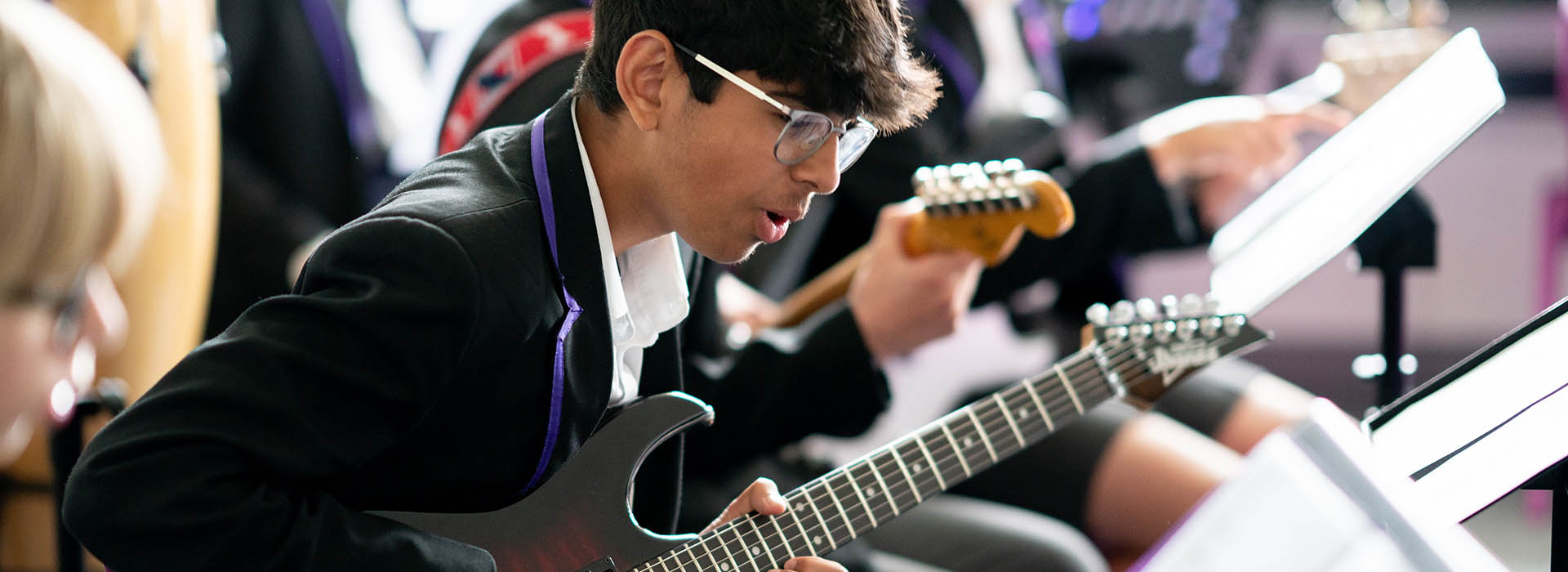
• Guitar
• Drums
• Singing (with two dedicated vocal coaches)
• Piano (with two specialist teachers)
From beginners to advanced, these one-to-one lessons are tailored to inspire progress and prepare students for graded exams, auditions, or simply the joy of mastering their instrument.
Performances & Showcases
The stage is where music truly comes alive at KWS — and our calendar is full of unmissable opportunities:
- Spring Concert – A vibrant evening of music, featuring ensembles, solos, and everything in between.
- Annual Mayor’s Concert – Represent KWS in style at this prestigious event, performing for our community with pride.
- Summer Recital Evening – An intimate night of solos and small ensembles, celebrating the individuality and artistry of our musicians.
- GCSE Recital Evening – A formal showcase where our GCSE students share their compositions and polished performances — a highlight of the year.
At KWS, we don’t just make music — we live it. From the buzz of rehearsals to the applause of an audience, our extra-curricular programme builds skills, confidence and friendships that last a lifetime.