Drama
The world of Drama and Theatre is a pillar stone to the world that is Performing Arts. Drama is vital for communication and success in learning across all subjects and in the wider world; and our Drama curriculum reflects this.
As our students journey through the Drama curriculum they will learn to use Drama as a craft to question and challenge their perception of the world all while developing their emotional intelligence and how to express themselves with emotion and clarity.
Students will learn and develop the essential performance skills of communication, development of character, devising techniques, character and script analysis and ability to confidently apply a range of vocal and physical skills. In addition to these performance skills, our students will learn, develop and sharpen the essential skills of communication, creativity, collaboration, clarity of expression, autonomy, leadership and confidence.
Analyse & Explore
In Drama, students analyse and explore a vast range of styles, practitioners and performances from Key Stage 3 all the way through to Key Stage 5. Through the exploration of different styles and practitioners students analyse performances (both professional and peer) to lay a foundation of knowledge and understanding before creating themselves.
Create & Develop
Applying their acquired knowledge and understanding, students are challenged to create their own pieces of theatre (devising from stimuli, creating their own interpretation of professional repertoire); then through the rehearsal process with the support of peer and teacher feedback students develop their own and peers’ performance and overall piece of theatre. In Key Stage 3 this takes the shape of attempting to create character, with valid attempts at communicating a thought or emotion to the audience and using theatrical conventions and devising techniques. This then progresses to the creation of sophisticated characters, complicated relationships and challenging pieces of theatre in Key Stage 4 and 5.
Share & Evaluate
Performance, audience feedback and evaluation are an imperative part of the creative process. Students regularly share their practical work to an audience, whether that be a peer or the whole class. With each performance, either live or watching their recorded performances back; students evaluate their own work and the work of their peers by focusing on characterisation, effective communication, application theatre style and techniques and audience interpretation. This evaluative work informs the students in the next phase of the creative process, improving their work and/ or applying their new knowledge to the next creative task.
Key Stage Three
In Year 7 the focus is on supporting our students to lay the foundations of collaboration, communication, creativity and expression through introducing our students to the world of theatre. Students will develop a basic understanding of theatre, apply basic acting skills and techniques to communicate meaning along with an intro to development of written analysis and evaluation. The Year 7 Drama curriculum focuses on developing a love of creating, collaborating and excitement for Drama.
With the foundation laid in Year 7, the focus in Year 8 is to challenge the students to question their perception of the world. The Year 8 curriculum expects the students to work at a higher level and develop their Drama skills in order to create and precisely communicate their ideas, whilst having the confidence to take their creativity, performance, communication and collaborative skills to the next level. Students will learn to analyse and evaluate more effectively. Upon completion of the KS3 curriculum, our students will be ready to begin KS4.
For those students who will finish their Drama journey at the end of KS3, they will leave having the skills to effectively communicate, express, collaborate and lead with an understanding appreciation for Theatre and Performance.
Year 7 Curriculum
| Autumn Term | Choral Storytelling | Students are introduced to the world of theatre and storytelling by applying their own creativity, ideas and collaborative skills to work as a chorus to tell a story through the lens of Greek Theatre. |
| Spring Term | Melodrama | Working from the storytelling foundation laid through the exploration of Greek Theatre, students focus on character portrayal and communication through the theatrical conventions and stock characters of Melodrama. Students are also introduced to devising theatre through the lens of Melodrama. |
| Summer Term | A Midsummer Night’s Dream | With a basic understanding of theatrical conventions, students turn their attention to developing their characterisation skills through the introduction and development of acting skills (vocal, physical & spatial) to communicate thoughts and emotions. Students analyse and explore the characters and relationships within Shakespeare’s comedy. |
Year 8 Curriculum
| Autumn Term | Darkwood Manor | Students step into the eerie world of Darkwood Manor, using their imagination to bring a gothic mystery to life. Through role play, soundscaping, atmosphere building and physical theatre, they explore how tension and suspense can be created on stage. The scheme develops students’ storytelling skills and ensemble awareness while encouraging them to use voice, movement and staging to create mood. The unit culminates in a devised performance where students combine their ideas to tell a haunting story filled with mystery, fear and dramatic impact. |
| Spring Term | Everybody’s Talking about Jamie | Students explore key scenes from Everybody’s Talking About Jamie, focusing on characterisation, status, and acting techniques. Through vocal and physical exercises, they develop their ability to portray emotions and relationships effectively, leading to a performance assessment. |
| Summer Term | Improvisation | Students develop creativity, confidence, and spontaneity by applying the core rules of improvisation to create and perform unscripted scenes. This unit builds resilience, adaptability, and collaboration, providing essential preparation for Year 9 Drama while also equipping all students with transferable skills in communication, quick thinking, and teamwork. |
Key Stage Four
Year 9 – To bridge the gap between KS3 and KS4 we focus on developing the skills and knowledge to ready the students to embark successfully through KS4 by:
- Developing acting skills and techniques, providing regular opportunities of performing to an audience
- Develop skills as theatre makers in reflection to a set text
- To challenge students to collaborate and devise theatre from more challenging, thought-provoking stimuli
- To enrich the lives of our students by experiencing live theatre
- To think critically through the analysis and evaluation of both professional work and live theatre.
Year 10 and 11 – To support and ready our students for final assessment and as theatre makers, performers and theatre critics. We intend to develop a lifelong love and application of Drama, enriching the whole student. Providing them with the necessary skills to be successful regardless of their next steps: communication, creativity, collaboration, clarity of expression, autonomy, leadership and confidence.
Year 9 Curriculum
| Autumn Term | |
| What is Devised Theatre? | Students are introduced to the process of creating original theatre from a stimulus, learning how to generate, structure, and refine their own material through collaboration. This unit builds creativity, problem-solving, and ensemble skills, laying the foundation for the devised component at GCSE Drama while strengthening transferable abilities in teamwork and innovation. |
| Choral storytelling | Through physical and vocal chorus techniques, students retell the story of Queen Njinga, exploring how theatre can give voice to history and culture. This unit develops ensemble awareness, creativity, and performance discipline, supporting future study in Drama and providing all learners with valuable skills in communication, empathy, and cultural understanding. |
| Physical Theatre | Students will develop their understanding of Physical Theatre by exploring the methodologies of Frantic Assembly. Emphasis will be placed on storytelling through physicality, using non-verbal communication to convey emotion, character, and narrative |
| Spring Term | |
| Scene Study – Stanislavski | Students will develop their understanding of naturalistic acting by exploring the techniques of Konstantin Stanislavski. Through detailed scene study, they will apply Stanislavski methods create truthful and believable performances. Students demonstrate their ability to apply Stanislavski’s techniques to a scripted scene, showcasing depth of character and authenticity in performance. |
| Live Theatre Review | Students will develop their ability to critically analyse and evaluate live theatre, focusing on the acting, staging, and overall impact of a professional production. After attending a live theatre performance, they will explore how actors use vocal and physical skills to communicate character and emotion, and how stage design elements enhance storytelling. Students will learn to articulate their responses with clarity, using subject-specific terminology. |
| Summer Term | |
| Page to Stage – A View from the Bridge | Students will take on the role of directors and designers, bringing a script to life through staging and lighting choices. They will explore how a director interprets text, blocking, and characterisation to shape a scene’s impact. Alongside this, they will develop an understanding of lighting design, learning how colour, intensity, and direction influence mood, atmosphere, and storytelling. |
| Devised Theatre – Brecht Theatre | Students will explore the techniques of Bertolt Brecht and how they can be applied to devised theatre. Through practical workshops, they will experiment with Brechtian conventions create performances that challenge, inform, and provoke thought. Students will develop their ability to devise theatre with a clear political or social message, using non-naturalistic techniques to engage and influence an audience. |
Year 10 Curriculum
| Term | Topic | Description |
| Autumn | Component 1: Devising Theatre
Component 3: Live Theatre Analysis |
Students start the first of three components of their GCSE course. In groups they respond to various stimuli before devising their own piece of theatre.
Students go to the theatre to watch a professional production as they analyse and evaluate it from an acting, design and director perspective. |
| Spring | Component 1: Devising Theatre | Students go through the final stages of the rehearsal process, before sharing their work to an audience (this is marked/ moderated as part of their exam). Students also complete their written portfolio alongside the rehearsal process, and post performance. |
| Summer | Component 1: Devising Theatre
Component 3: Theatre Makers in Practice |
Students finish, and submit their coursework.
Component 3: Bringing Texts to Life; in Year 10 students through a written response will apply their Drama Skills on how a play should be brought to life through the POV of a Director, Actor and Creative Team (Lighting, Sound, Costume, Set). In this Unit, students will produce their own mini production of the set text. |
Year 11 Curriculum
| Term | Topic | Description |
| Autumn | Component 3: Theatre Makers in Practice | Component 3: Bringing Texts to Life; in Year 11 students through a written response will apply their Drama Skills on how a play should be brought to life through the POV of a Director, Actor and Creative Team (Lighting, Sound, Costume, Set). In this Unit, students will produce their own mini production of the set text. |
| Spring | Component 2: Performance from a text
Component 3: Live Theatre Makers in Practice |
Students navigate themselves through the rehearsal process to get their performance from a text to the best possible standard before sharing their performance to a live audience and examiner.
Students revisit An Inspector Calls focusing on specific analytical and evaluative elements. Students will attend a live professional performance making notes as they prepare to analyse and evaluate it in their final written exam. |
| Summer | Component 3: Live Theatre Makers in Practice (exam prep) | Final preparation is undertaken for the Summer Exam. |
Extra Curricular & Trips
Drama Club (Years 7 & 8) – A welcoming space for younger students to develop their performance skills, build confidence, and enjoy creating theatre with friends. Sessions often lead to short performances and showcases that celebrate students’ imagination and teamwork.
KWS Theatre Company – KWS Theatre Company is a brand-new performance group for anyone with a passion for acting, storytelling, and the magic of live theatre. Whether you’re an experienced performer or completely new to the stage, this is your chance to develop your skills, work as an ensemble, and take part in exciting productions throughout the year.
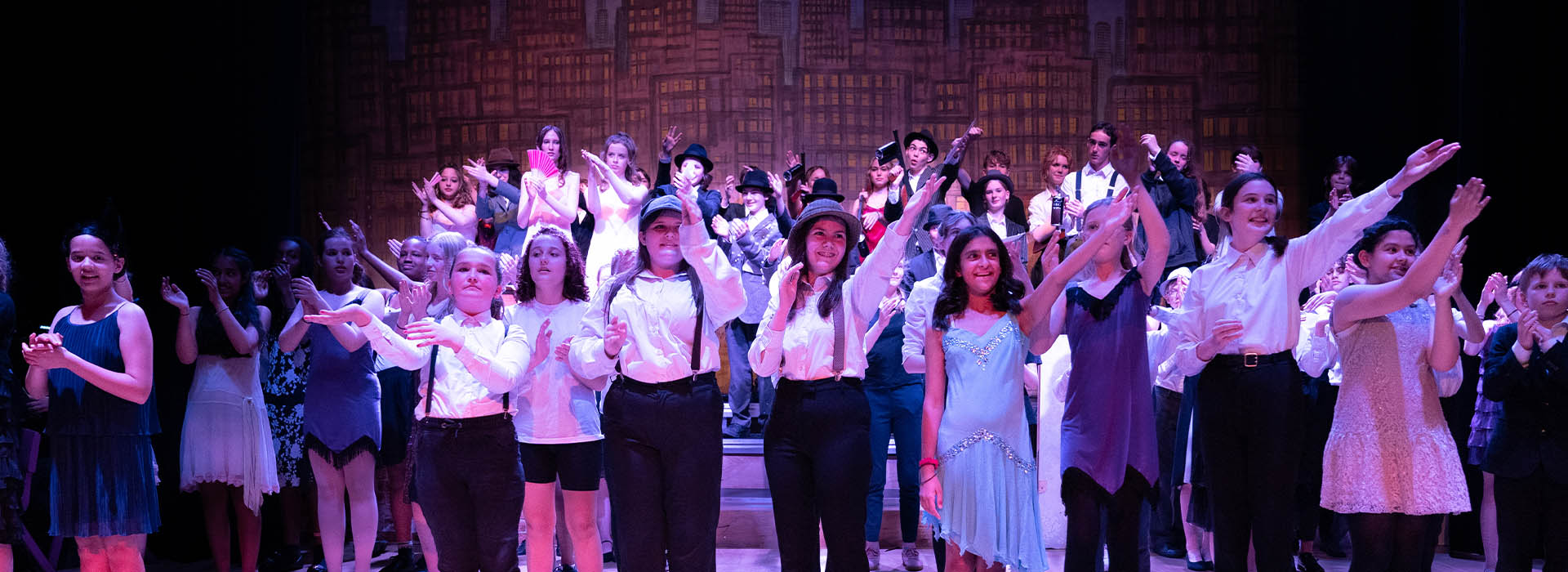
School Productions – Each year, we alternate between a major play and a musical, giving students the opportunity to experience different forms of theatre-making. From large-scale musicals filled with singing, dancing and ensemble numbers, to powerful plays with challenging themes, our productions are a highlight of the school calendar.
Stage Combat Club – A unique opportunity for students to learn safe but spectacular combat techniques. From sword fighting to choreographed brawls, this club teaches precision, discipline and teamwork, while adding an exciting new skill to students’ performance repertoire.
Theatre Trips – Live theatre is at the heart of Drama education. We run regular trips to professional productions in London’s West End and beyond, as well as touring shows and local performances. These experiences bring classroom learning to life, broaden students’ cultural horizons, and inspire them with world-class performance.